Aluminum Nitride (AlN) Powders and Thermal Fillers
Aluminum nitride (AlN) is considered for applications that require both heat transfer and electrical insulation. Powders used to make sintered parts and fillers blended into resins have different selection criteria.
Where is aluminum nitride used?
Aluminum nitride (AlN) is used in designs that need to transfer heat while maintaining electrical insulation. GHT offers two types of starting material: powder for sintered ceramic substrates and components, and filler for thermally conductive resin formulations.
Cover photo: Aluminum nitride thermal filler
M series | High-purity powder for sintering
The powder is formed and sintered for applications such as electrically insulating substrates in power semiconductor modules and heat-dissipating substrates in high-power LEDs and laser packages. The sintered substrate separates the circuit electrically from the metal base while carrying heat away from the chip.
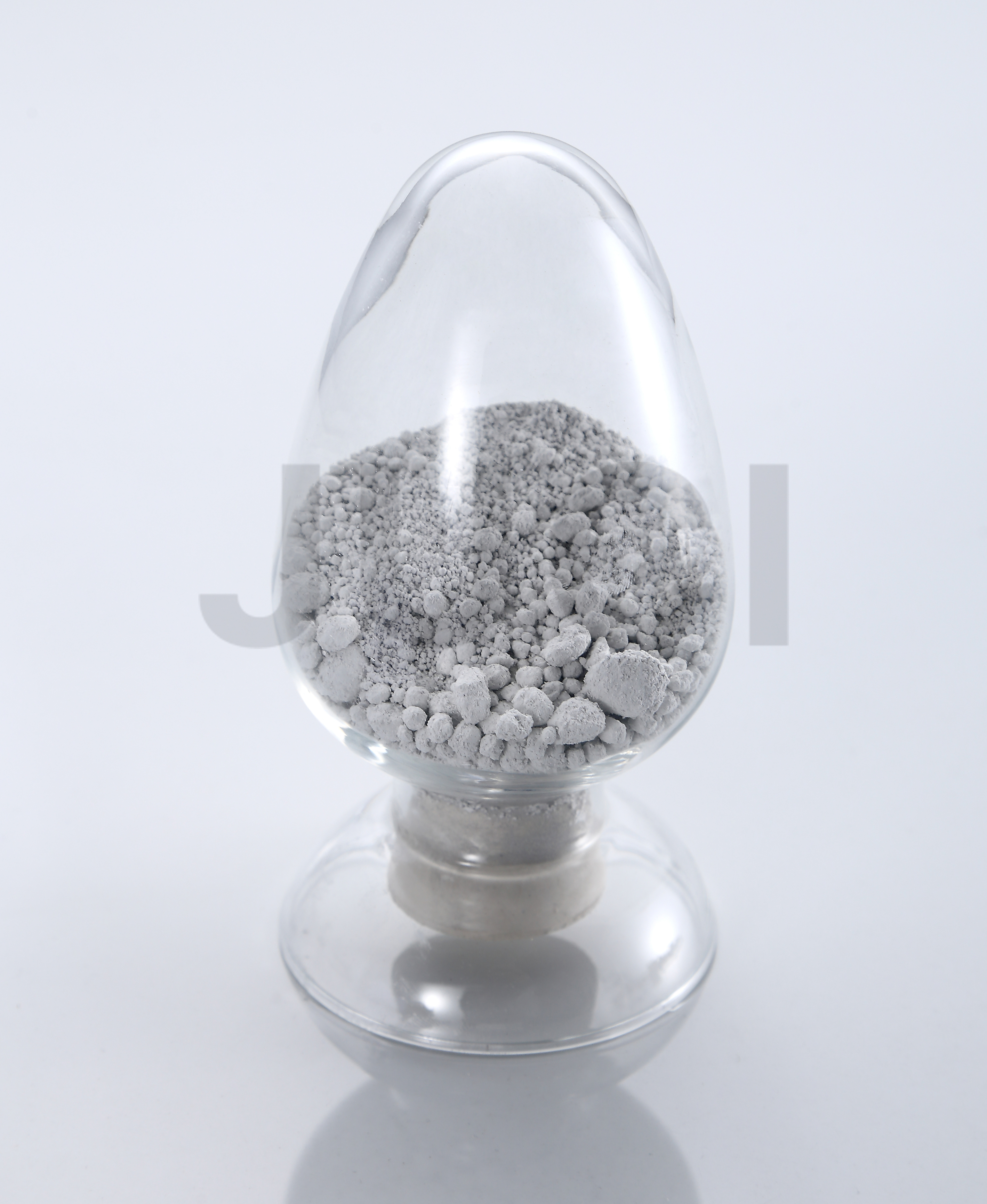
Product photo: Aluminum nitride powder for sintering
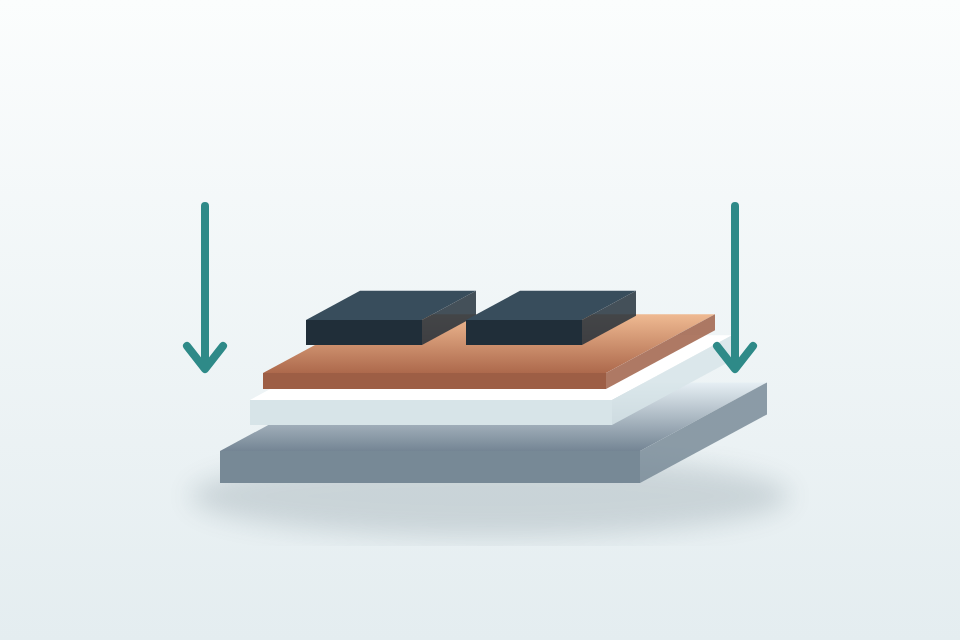
Application illustration: Heat travels through the ceramic substrate to the metal base
F and S series | Thermal fillers for resin formulations
F is a single-crystal series; S is a polycrystalline series. Both can be evaluated as fillers for silicone or epoxy used in thermal pads, gap fillers and thermally conductive adhesives. For example, a pad or gap filler helps conduct heat by filling the space between a chip and its heat sink.
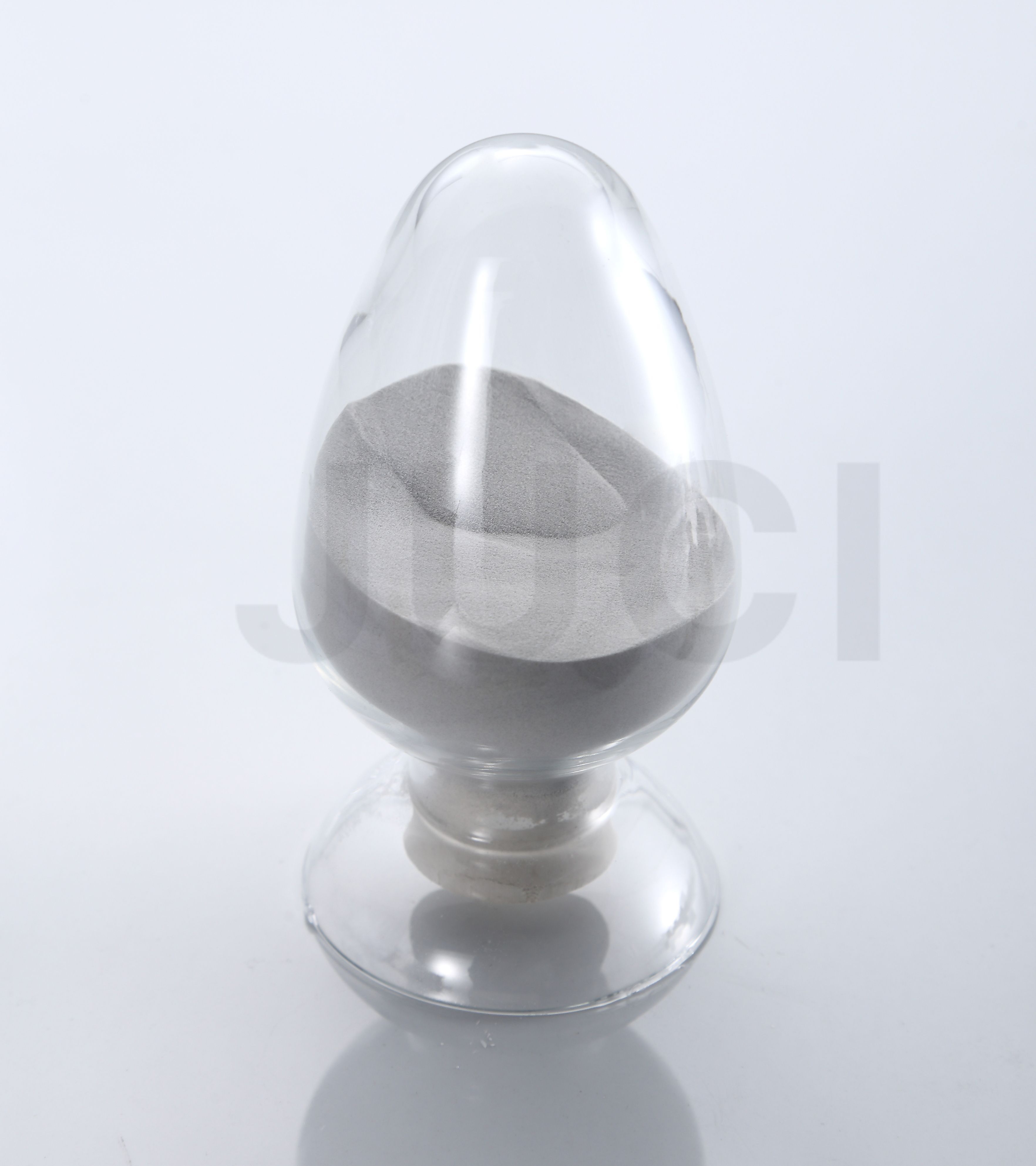
Product photo: Aluminum nitride thermal filler

Application illustration: A thermal pad between the chip and heat sink
What to check when selecting a grade
For sintering, check the target particle size, oxygen content and forming and firing conditions. For fillers, review resin type, particle-size distribution, filler loading, mixture viscosity and the target thermal conductivity together. Evaluate the actual formulation and thickness on a representative sample.
Product families and key specifications
M series | High-purity powder for sintering
Feedstock for ceramic parts made by forming and sintering. Consider particle size and oxygen content alongside processing conditions and finished-part requirements.
| Grade | Mean particle size (μm) | Oxygen content (wt.%) |
|---|---|---|
| M-G | 1.2–1.5 | <1.0 |
| M-C | 1.2–1.5 | <1.0 |
| M-Q | 1.5–1.8 | <0.7 |
| M-K | 1.2–1.8 | ≤1.0 |
| M-S | 1.0–1.4 | <1.0 |
| M-QS | 1.4–1.8 | <0.65 |
F series | Near-spherical single-crystal thermal filler
For resin formulations such as thermal adhesives, encapsulants and gap fillers. Consider particle size distribution, filler loading and compound viscosity.
| Grade | D50 (μm) | D90 (μm) | Oxygen content (%) |
|---|---|---|---|
| F-007 | 1.0–1.4 | <2.6 | <1.1 |
| F-01 | 1.2–1.4 | <2.8 | <0.8 |
| F-01T | 1.3–1.6 | <3.5 | <1.0 |
| F-02 | 1.8–2.2 | <4 | 0.4–0.9 |
| F-03 | 2.8–3.5 | <6 | 0.4–0.9 |
| F-05 | 5.0–6.0 | <10 | 0.2–0.8 |
| F-10 | 9.5–11 | <18 | 0.2–0.8 |
| F-15 | 13.5–15 | <25 | 0.2–0.8 |
S series | Near-spherical polycrystalline thermal filler
Polycrystalline filler for thermally conductive composites. Consider particle size distribution, filler loading and compound viscosity.
| Grade | D50 (μm) | True density (g/cm³) | Oxygen content (%) |
|---|---|---|---|
| S-25 | 25–30 | 3.3 | <2.2 |
| S-30 | 30–40 | 3.3 | <2.1 |
| S-50C | 48–58 | 3.3 | <2.1 |
| S-80C | 70–80 | 3.3 | <2.1 |
| S-80 | 80–90 | 3.3 | <2.1 |
| S-100C | 98–108 | 3.3 | <2.1 |
| S-120 | 120–130 | 3.3 | <2.1 |
Grade inquiries
Please share the resin or substrate, processing method, target thermal conductivity, insulation requirements, preferred particle size and evaluation quantity.
Downloads
Related downloads
- PDFGHT Aluminum Nitride (AlN) Product Guide [Korean PDF]Download ↓
- PDFGHT Aluminum Nitride (AlN) Product Guide [English PDF]Download ↓
- PDFGHT Aluminum Nitride (AlN) Product Guide [Japanese PDF]Download ↓
Related
Other products in this line
Inquire about Aluminum Nitride (AlN) Powders and Thermal Fillers specifications
Share your application, specifications and required quantity. We’ll help you choose a product suited to your process and operating environment.